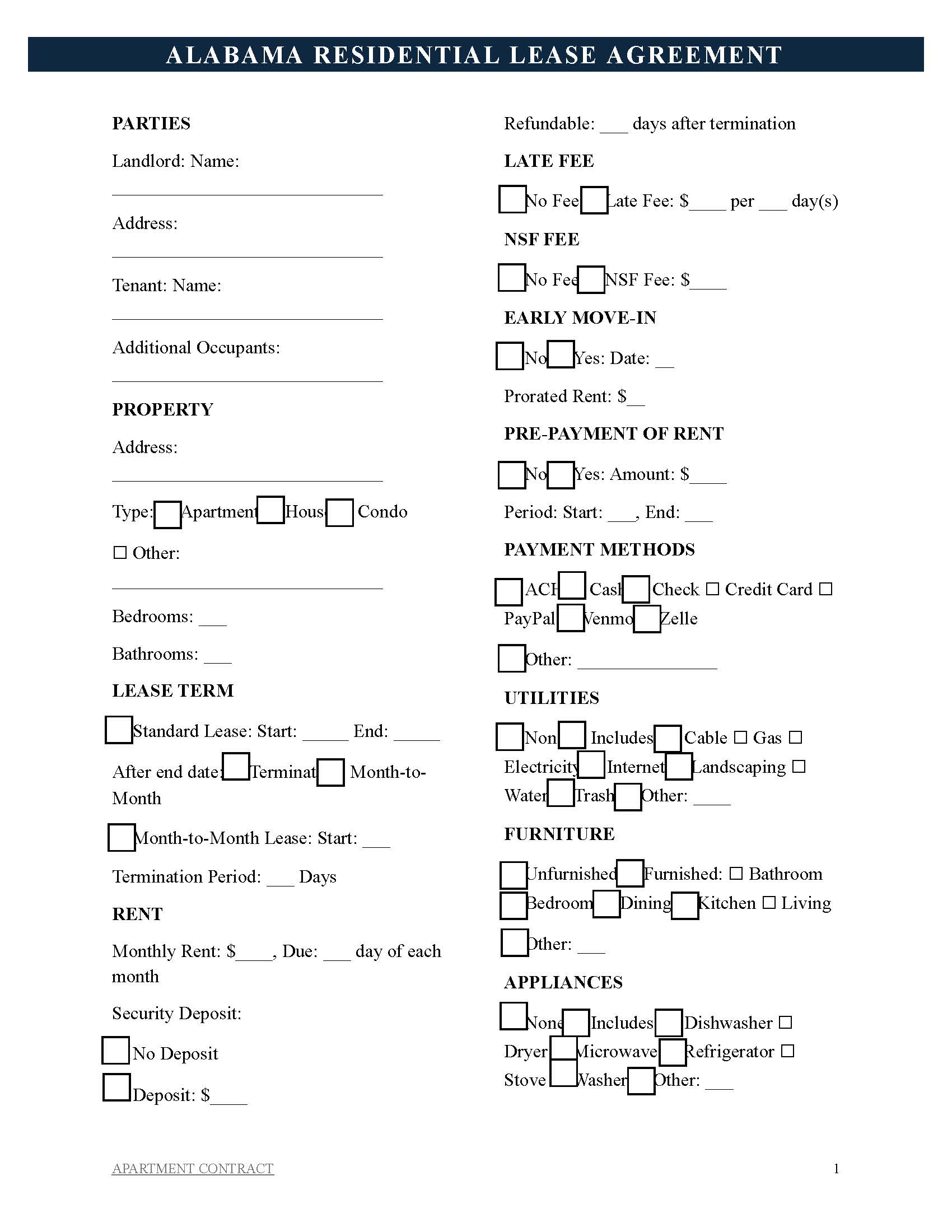
Alabama Residential Lease Agreement Generator
Navigating the Alabama Residential Lease Agreement Process
As you embark on the journey of renting a property in Alabama, understanding the intricacies of the residential lease agreement process is crucial. This legally binding document serves as the foundation of your tenancy, outlining the rights and responsibilities of both landlords and tenants. Navigating this process can seem daunting, but with the right knowledge and preparation, you can ensure a smooth and mutually beneficial arrangement. In this comprehensive guide, you’ll discover the key components of an Alabama residential lease agreement, learn about state-specific regulations, and gain valuable insights to protect your interests throughout your tenancy.

Understanding the Alabama Residential Lease Agreement
A residential lease agreement in Alabama is a legally binding contract between a landlord and tenant that outlines the terms and conditions of renting a property. Understanding this document is crucial for both parties to ensure a smooth rental experience and avoid potential disputes.
Key Components of the Agreement
Alabama lease agreements typically include essential details such as the names of the parties involved, property description, rent amount, and lease duration. They also outline responsibilities for maintenance, utilities, and any specific rules or restrictions. Familiarizing yourself with these components is vital for both landlords and tenants to understand their rights and obligations.
Alabama-Specific Laws and Disclosures
When drafting or signing a lease agreement, it’s important to be aware of Alabama’s specific landlord-tenant laws. These laws govern aspects such as security deposits, eviction procedures, and maintenance responsibilities. Additionally, certain disclosures may be required by law, such as information about lead-based paint for properties built before 1978.
Utilizing Templates and Professional Assistance
While many landlords use standardized templates for their lease agreements, it’s essential to ensure that any template used complies with Alabama state laws. Consider consulting with a legal professional to review or customize your agreement, especially if you have unique circumstances or specific concerns.
By thoroughly understanding the Alabama residential lease agreement process, both landlords and tenants can protect their interests and establish a clear foundation for their rental relationship.
Key Provisions in the Lease Template
When navigating the Alabama Residential Lease Agreement process, it’s crucial to understand the essential components of a well-crafted lease template. These provisions protect both landlords and tenants while ensuring compliance with Alabama laws.
Rent and Security Deposit
Your lease should clearly state the monthly rent amount, due date, and acceptable payment methods. Alabama laws allow landlords to charge up to one month’s rent as a security deposit, which must be returned within 60 days of lease termination, minus any lawful deductions.
Term and Renewal
Specify the lease duration, typically 12 months, and outline the renewal process. Include any provisions for rent increases upon renewal to avoid future disputes.
Maintenance and Repairs
Clearly define the responsibilities of both the landlord and tenant regarding property maintenance. Alabama law requires landlords to maintain habitable conditions, while tenants are responsible for keeping the property clean and undamaged.
Required Disclosures
Ensure your lease template includes all necessary disclosures mandated by Alabama law. These may include lead-based paint warnings for properties built before 1978 and information about flood risks if applicable.
By incorporating these key provisions into your lease template, you’ll create a comprehensive agreement that protects all parties involved and adheres to Alabama’s residential tenancy laws.
Landlord and Tenant Responsibilities Under Alabama Rental Laws
As a landlord or tenant in Alabama, understanding your rights and obligations is crucial for a smooth rental experience. Alabama laws govern the relationship between property owners and renters, establishing clear responsibilities for both parties.
Landlord Responsibilities
Landlords in Alabama must provide a habitable living space that complies with local building and health codes. This includes:
Maintaining structural elements of the property
Ensuring functional plumbing, electrical, and heating systems
Addressing pest infestations promptly
Additionally, landlords are required to make necessary repairs within 14 days of receiving written notice from the tenant. Failure to do so may result in tenants exercising their right to repair and deduct costs from rent.
Tenant Responsibilities
It’s important to note that tenants are responsible for damages beyond normal wear and tear. Familiarizing yourself with these laws and incorporating them into your lease agreement can prevent misunderstandings and potential legal issues. Tenants also have obligations under Alabama rental laws. These include:
- Paying rent on time
- Keeping the rental unit clean and sanitary
- Promptly reporting necessary repairs to the landlord
- Allowing reasonable access for inspections or repairs
Required Disclosures
Using comprehensive lease templates that include these disclosures can help ensure compliance with Alabama’s rental laws and protect both landlords and tenants. Alabama law mandates certain disclosures in residential lease agreements. Landlords must inform tenants about:
- Lead-based paint hazards in properties built before 1978
- The presence of mold or other environmental hazards
- Any known defects that could affect the tenant’s health or safety
Important Disclosures for Landlords and Tenants
When entering into an Alabama Residential Lease Agreement, both landlords and tenants must be aware of crucial disclosures required by law. These disclosures ensure transparency and protect the rights of both parties involved in the rental process.
Lead-Based Paint Disclosure
For properties built before 1978, landlords must provide tenants with a lead-based paint disclosure. This form informs tenants about the potential presence of lead-based paint and associated health risks. Landlords should use approved templates to ensure compliance with federal and state laws.
Mold Disclosure
Alabama law requires landlords to disclose any known presence of mold in the rental property. This disclosure helps tenants make informed decisions about their health and safety. Landlords should document any mold-related issues and provide this information to prospective tenants.
Security Deposit Details
Landlords must clearly disclose the amount of the security deposit, how it will be held, and the conditions for its return. This information should be explicitly stated in the lease agreement to avoid future disputes.
Utility Responsibilities
The lease agreement should clearly outline which utilities are the tenant’s responsibility and which are covered by the landlord. This disclosure helps prevent misunderstandings and potential conflicts during the tenancy.
By including these essential disclosures in your Alabama Residential Lease Agreement, you ensure compliance with legal requirements and foster a transparent landlord-tenant relationship. Always consult with a legal professional to ensure your lease agreement adheres to the latest laws and regulations.
Navigating the Lease Signing and Move-In Process
Preparing for Lease Signing
Before signing your Alabama Residential Lease Agreement, carefully review all terms and conditions. Familiarize yourself with Alabama’s landlord-tenant laws to ensure the agreement complies with state regulations. If you have any questions or concerns, don’t hesitate to seek clarification from your landlord or a legal professional.
The Signing Process
When you’re ready to sign, ensure all parties are present. Both the landlord and tenant should initial each page and sign the final page. Make sure to obtain a copy of the signed lease for your records. Many landlords now offer digital signing options, which can streamline the process.
Move-In Procedures
On move-in day, conduct a thorough walk-through of the property with your landlord. Document the condition of the unit, taking photos or videos as necessary. This step is crucial for protecting both parties when it comes time to assess potential damages at the end of the lease term.
Understanding Your Rights and Responsibilities
As a tenant, it’s essential to understand your rights and responsibilities under Alabama law. Familiarize yourself with key aspects such as rent payment procedures, maintenance requests, and any specific rules outlined in your lease. Landlords are required to provide certain disclosures, such as information about lead-based paint in older properties.
Remember, clear communication between landlord and tenant is key to a positive leasing experience. Don’t hesitate to ask questions or seek clarification on any aspect of your lease agreement or the move-in process.
Conclusion
As you navigate the Alabama residential lease agreement process, remember that attention to detail and clear communication are key. By understanding the legal requirements, customizing the agreement to your specific situation, and ensuring all parties are fully informed, you set the foundation for a positive landlord-tenant relationship. Take the time to review the agreement thoroughly before signing, and don’t hesitate to seek legal counsel if you have any questions or concerns. With proper preparation and diligence, you can create a comprehensive lease agreement that protects your interests and provides a solid framework for a successful tenancy in Alabama.